
Mouni Roy in Sheer White and Gold Saree Drape
Examining Mouni Roy’s refined aesthetic in delicate gold-bordered sheer white textiles. See the details.
By Isla Brandt·Published
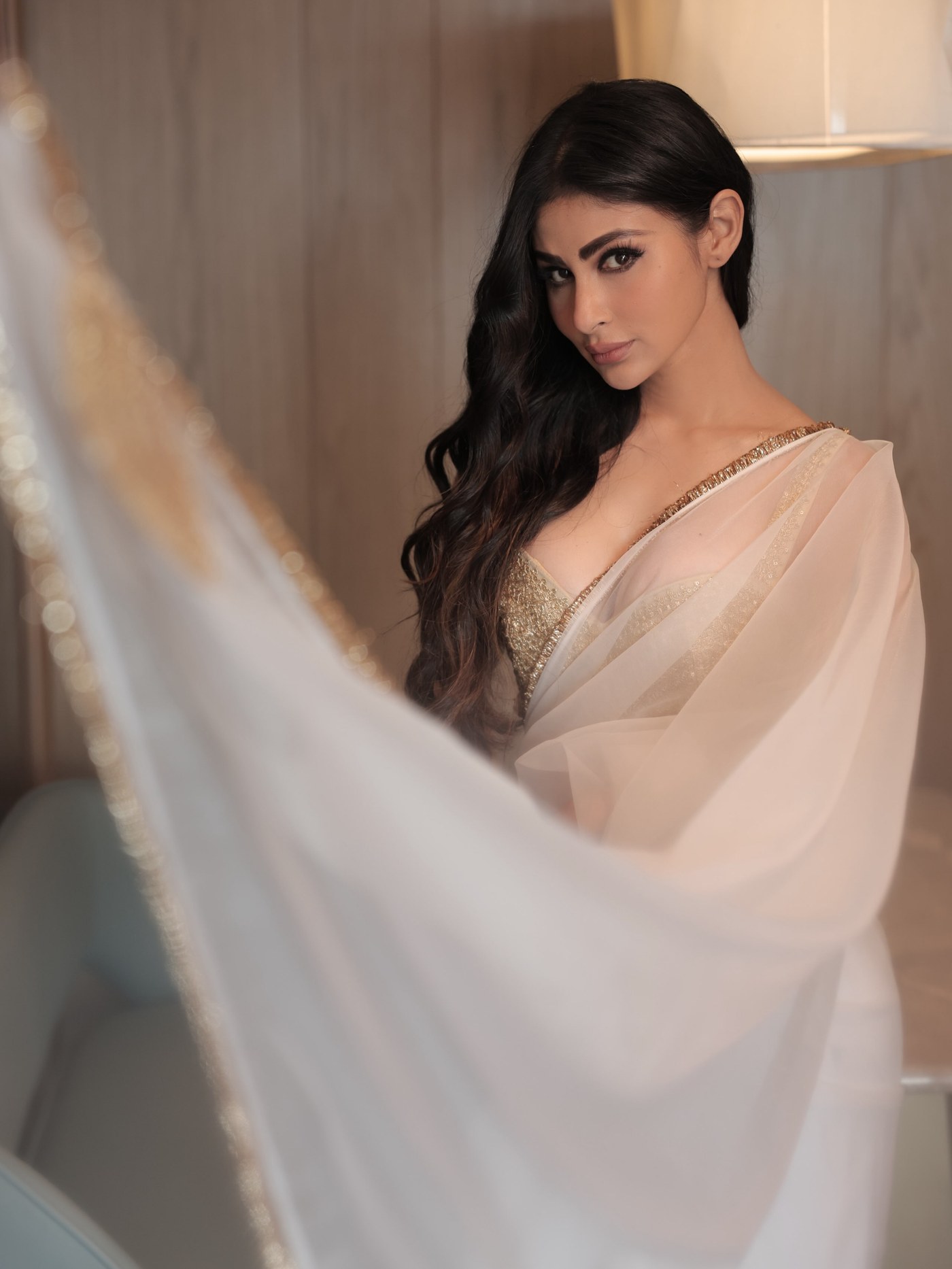
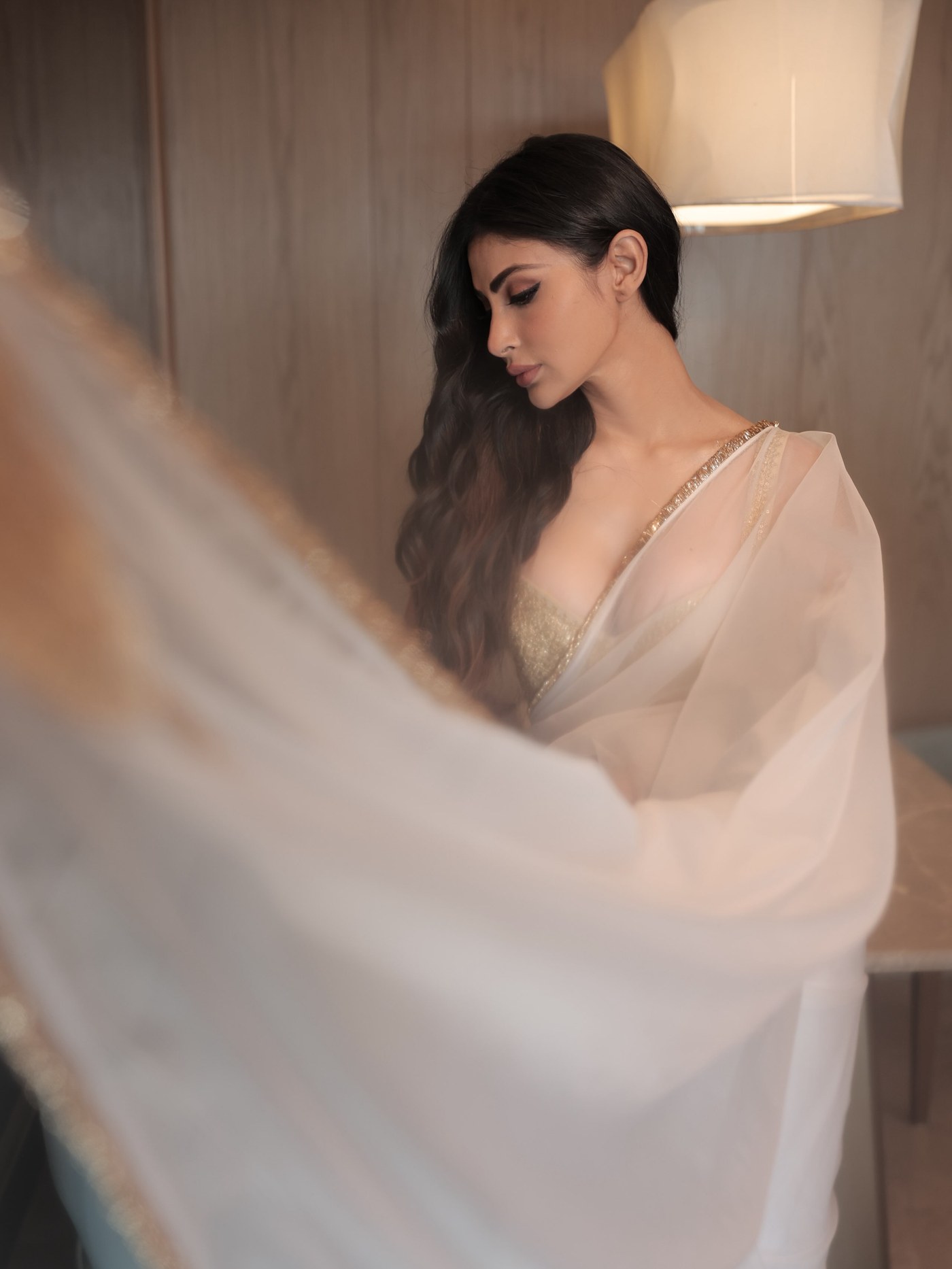
Mouni Roy has presented a specific visual narrative through a series of shared images, focusing on a quiet indoor setting. The presentation centers entirely on the garment and the specific quality of the lighting. Mouni Roy is captured looking directly toward the lens, maintaining a measured gaze. The context provided suggests this sharing occurred on an occasion associated with the cultural sphere, though no specific event is named beyond the act of photo sharing.
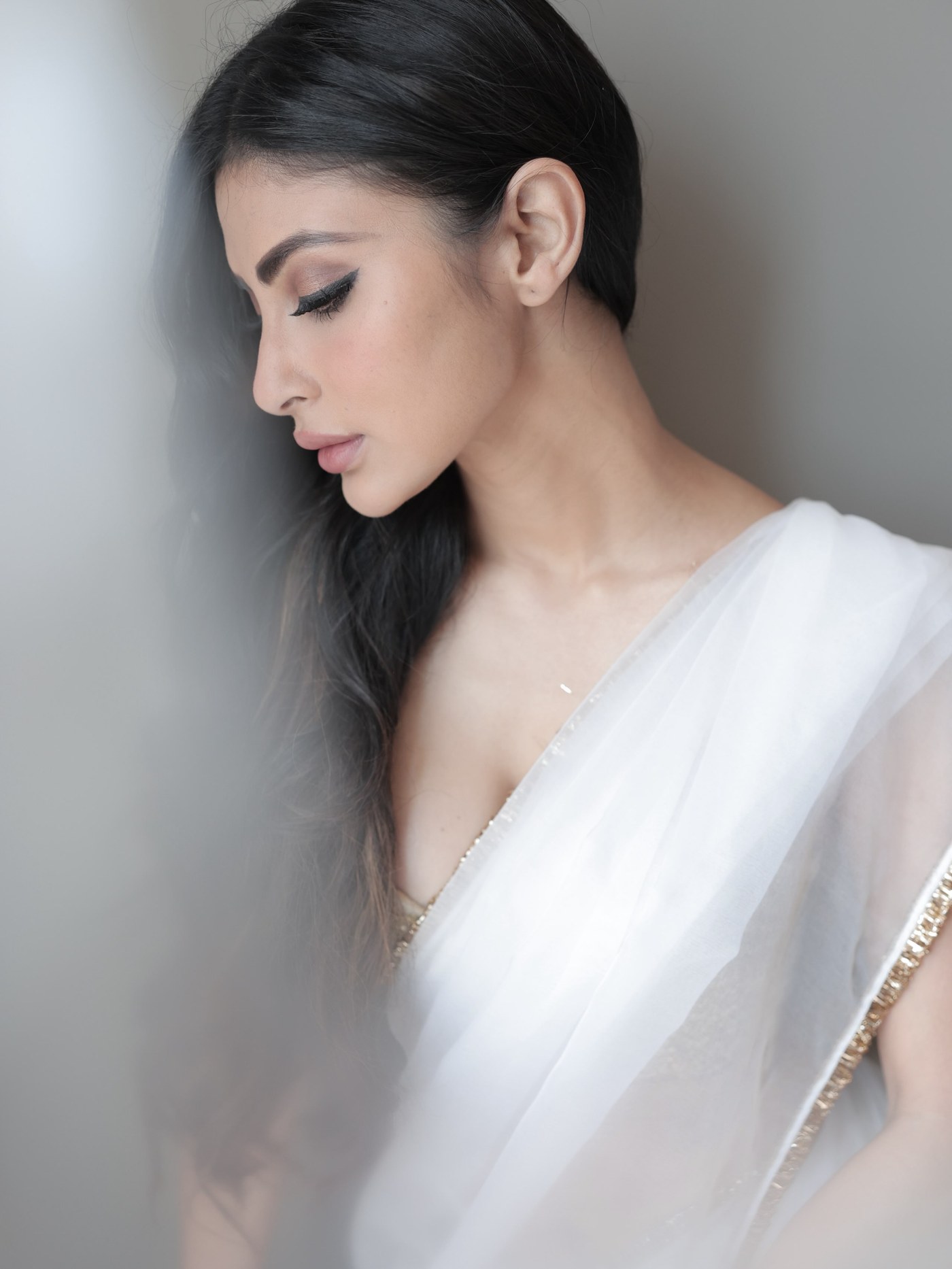
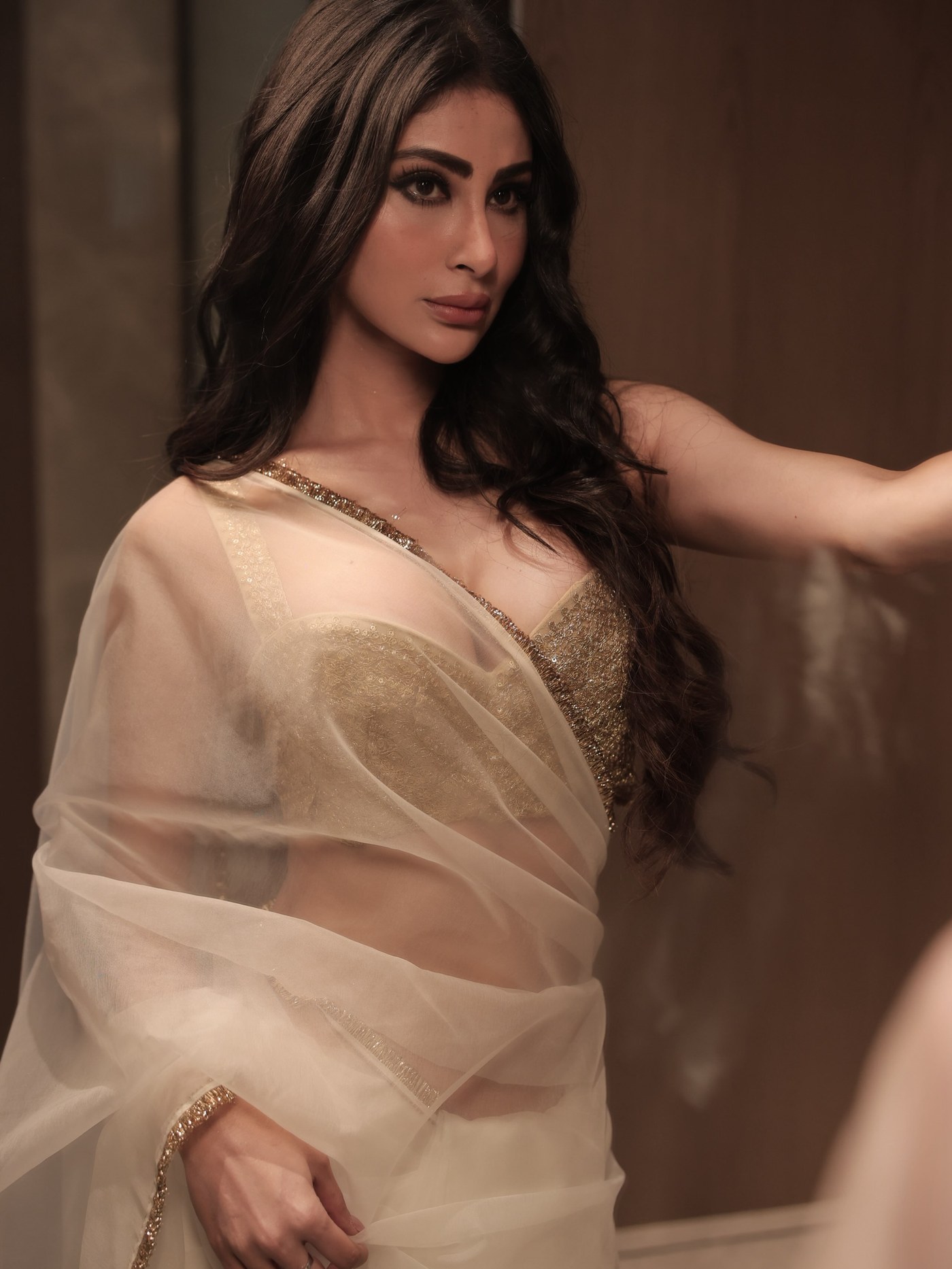
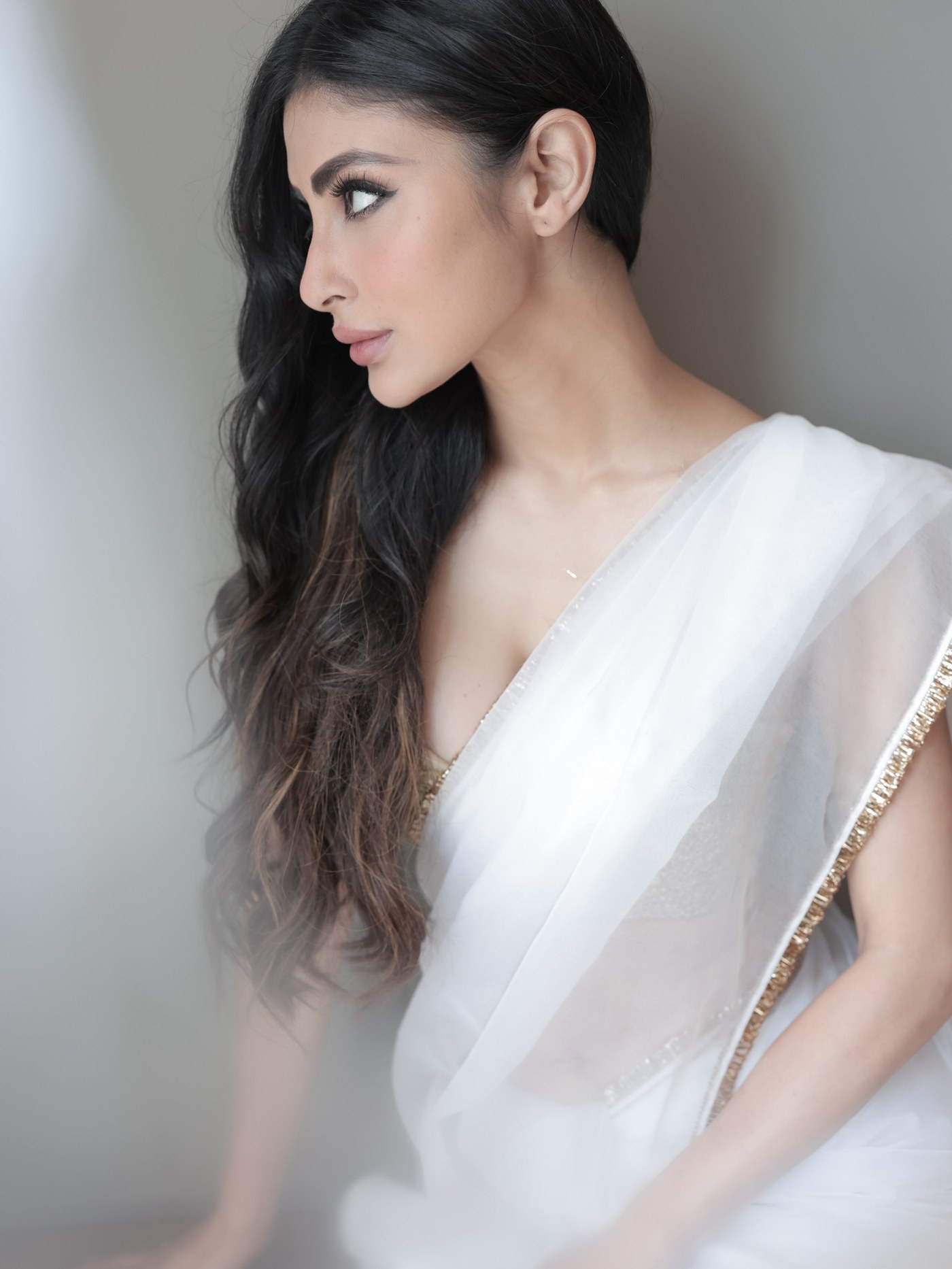
This particular visual articulation leans into traditional ethnic fashion, characterized by the use of a white saree. The description emphasizes the lightness of the fabric, noting that the material is sheer. This choice moves the aesthetic away from heavy brocade towards something more diaphanous, allowing the soft illumination of the indoor space to interact with the textile’s texture. The accompanying elements—the long, dark, wavy hair positioned over one shoulder and the application of soft makeup—contribute to a look that prioritizes subtle texture over high-intensity styling.
Given the background context mentioning various cultural and geographical markers associated with Indian cinema, Mouni Roy’s appearance here aligns with a presentation of traditional Indian style. The focus remains tightly on the construction of the ensemble: the sheer white material contrasted with the metallic accents provided by the gold embellishments, creating a specific visual rhythm within the frame.
Photo Gallery
 Adorning a sheath dress in a deep sapphire hue, the drape of the fabric appears to be a substantial crepe, lending a structured silhouette. The cut highlights the waistline with clean vertical lines, contrasting sharply with the warm undertones of the skin. Such a monochromatic study showcases a clear understanding of color saturation in eveningwear.
Courtesy: Mouni Roy/Social Media
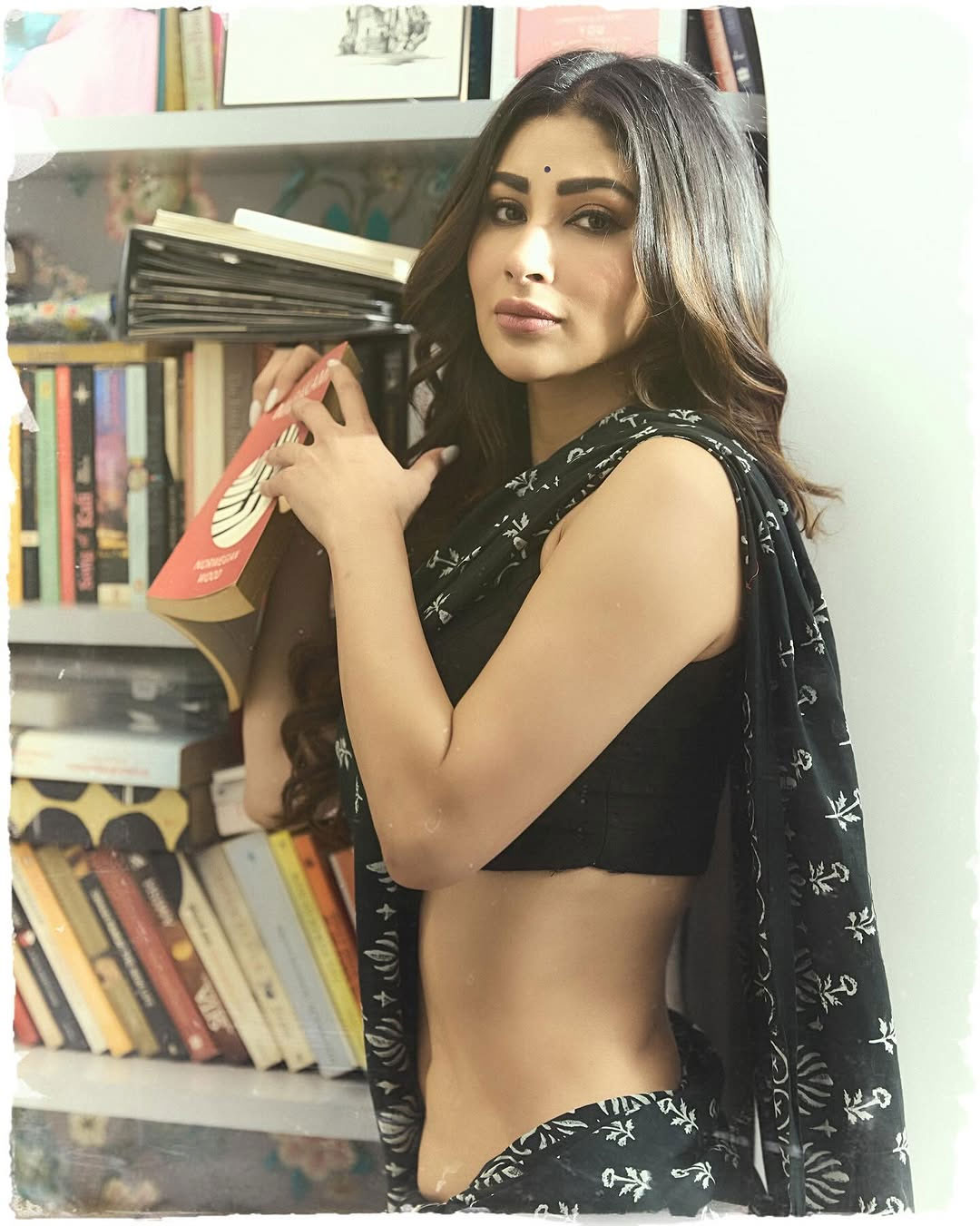 Straighter lines define this ensemble, featuring a trouser suit in a charcoal wool blend. The tailoring is precise, particularly around the shoulder structure, suggesting careful construction rather than simple draping. Paired with a crisp, high-neck blouse, the monochromatic palette relies on textural variation for visual interest.
Courtesy: Mouni Roy/Social Media
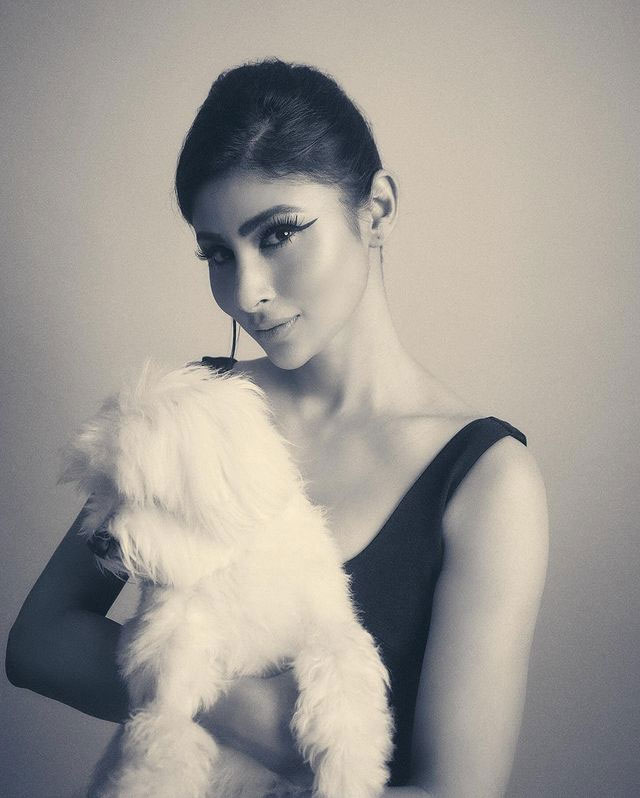 A fluid slip dress, rendered in a shimmering liquid silver material, moves with the posture. The bias cut ensures the fabric adheres closely to the body’s contours without excessive restriction. The reflectivity of the material is a key design element, playing off the ambient lighting.
Courtesy: Mouni Roy/Social Media
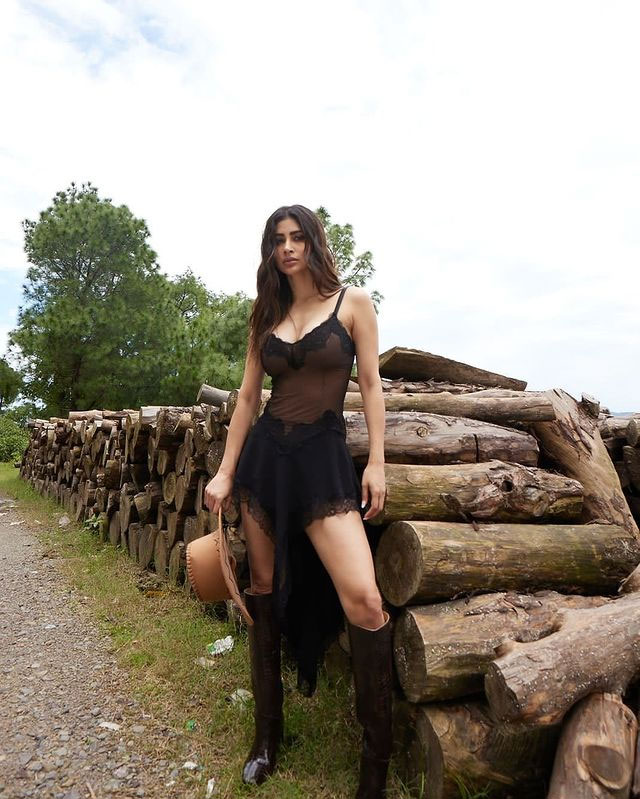 With structured tailoring in mind, this look presents a tailored jumpsuit in a rich burgundy jacquard. The geometric patterning woven into the fabric provides depth, moving beyond a flat solid. The broad sleeve silhouette balances the narrow leg line of the garment.
Courtesy: Mouni Roy/Social Media
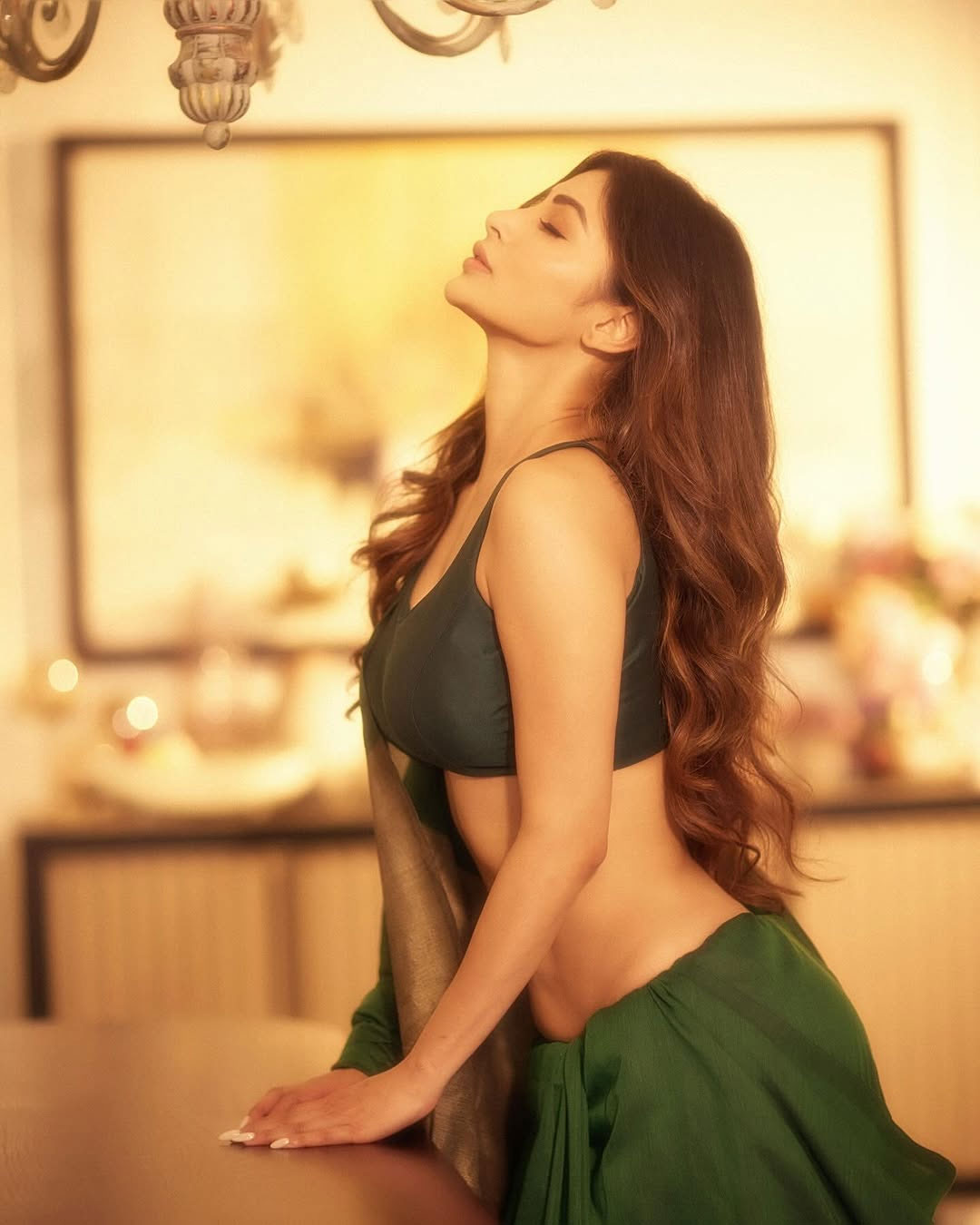 Focusing on softer textures, the ensemble features a midi-length column dress made from a matte silk chiffon. The color, a muted moss green, reads as subdued yet rich. The simplicity of the silhouette allows the quality of the textile to dictate the visual impact.
Courtesy: Mouni Roy/Social Media
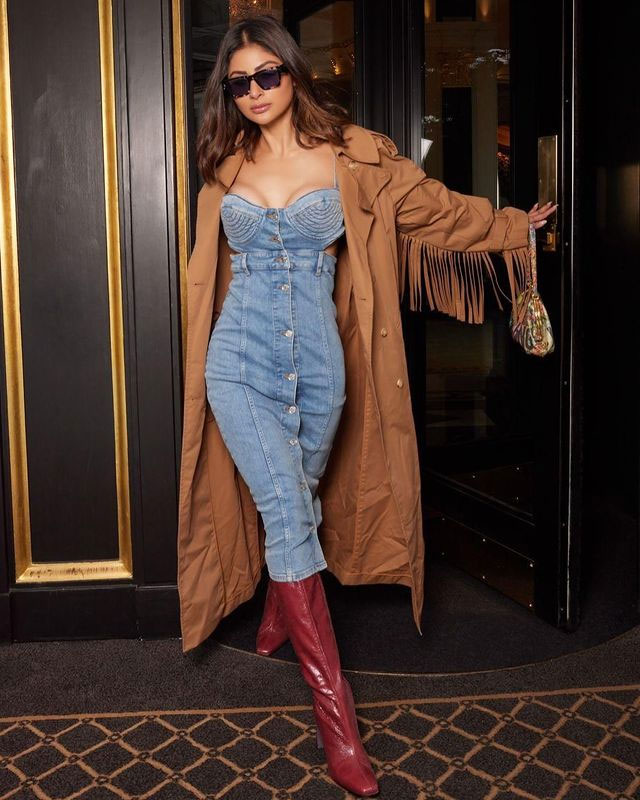 This appearance utilizes a bold color pairing: a bright tangerine top juxtaposed against a tailored navy skirt. The meeting point of the two fabrics at the waist is a point of deliberate design. The difference in fabric weight between the two pieces provides textural contrast.
Courtesy: Mouni Roy/Social Media
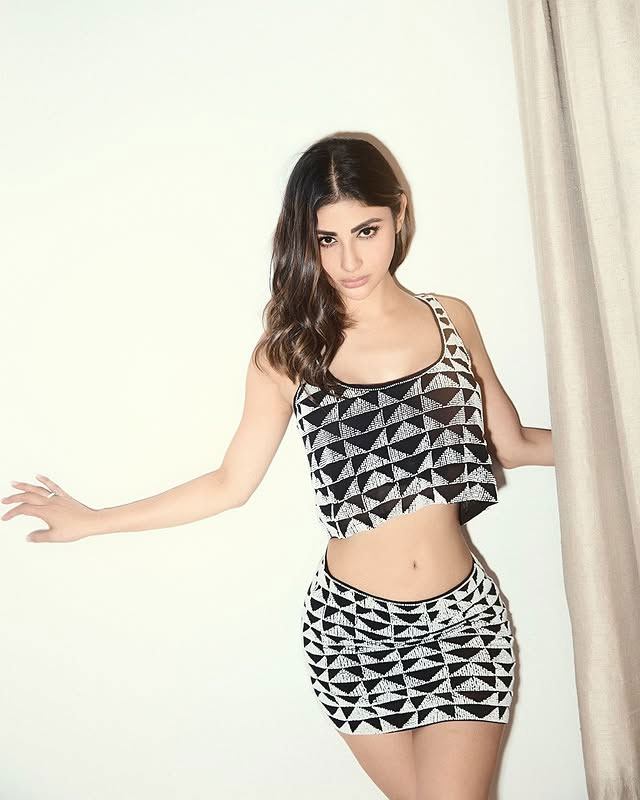 A monochromatic approach in ivory linen defines this daytime look. The fabric exhibits the characteristic slight crinkle of linen, lending an inherent casualness despite the defined A-line cut. The structure relies on the inherent stiffness of the weave.
Courtesy: Mouni Roy/Social Media
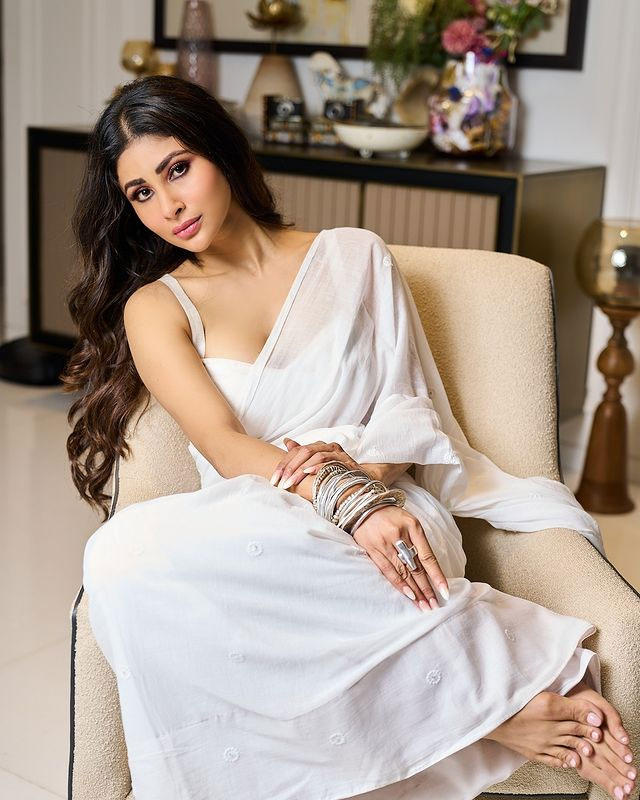 Wearing a statement coat in a houndstooth pattern, the layering is complex. The graphic scale of the pattern is substantial, making the texture the primary visual feature. The dark base tones—black and charcoal—keep the pattern grounded against the figure.
Courtesy: Mouni Roy/Social Media
Style Notes
The construction of Mouni Roy’s attire is defined by its color palette and fabric weight. The primary component is a light, sheer white saree. This sheerness is crucial to the visual effect, as it diffuses the light, lending a muted quality to the overall chromatic scheme.
The gold accents are not structural but rather decorative, appearing as delicate borders along the edges of the saree. The accompanying blouse features gold embellishment, which provides a specific point of metallic contrast against the pale body of the fabric. The way the material drapes is described as loose, suggesting a soft fall rather than a stiff, structured silhouette. This loose draping interacts with the soft lighting to create gentle highlights and shadows across the textile’s surface.
From a fashion perspective, this is an exercise in subtle metallic accenting. The gold is used to add a subtle sheen—a controlled reflection rather than a high-gloss impact. The contrast is one of texture: the light, airy body of the white textile against the density of the gold embroidery. This combination achieves a look rooted in traditional ethnic wear, but one that favors material delicacy and refined surface detail over heavy, opaque construction.
More Photos
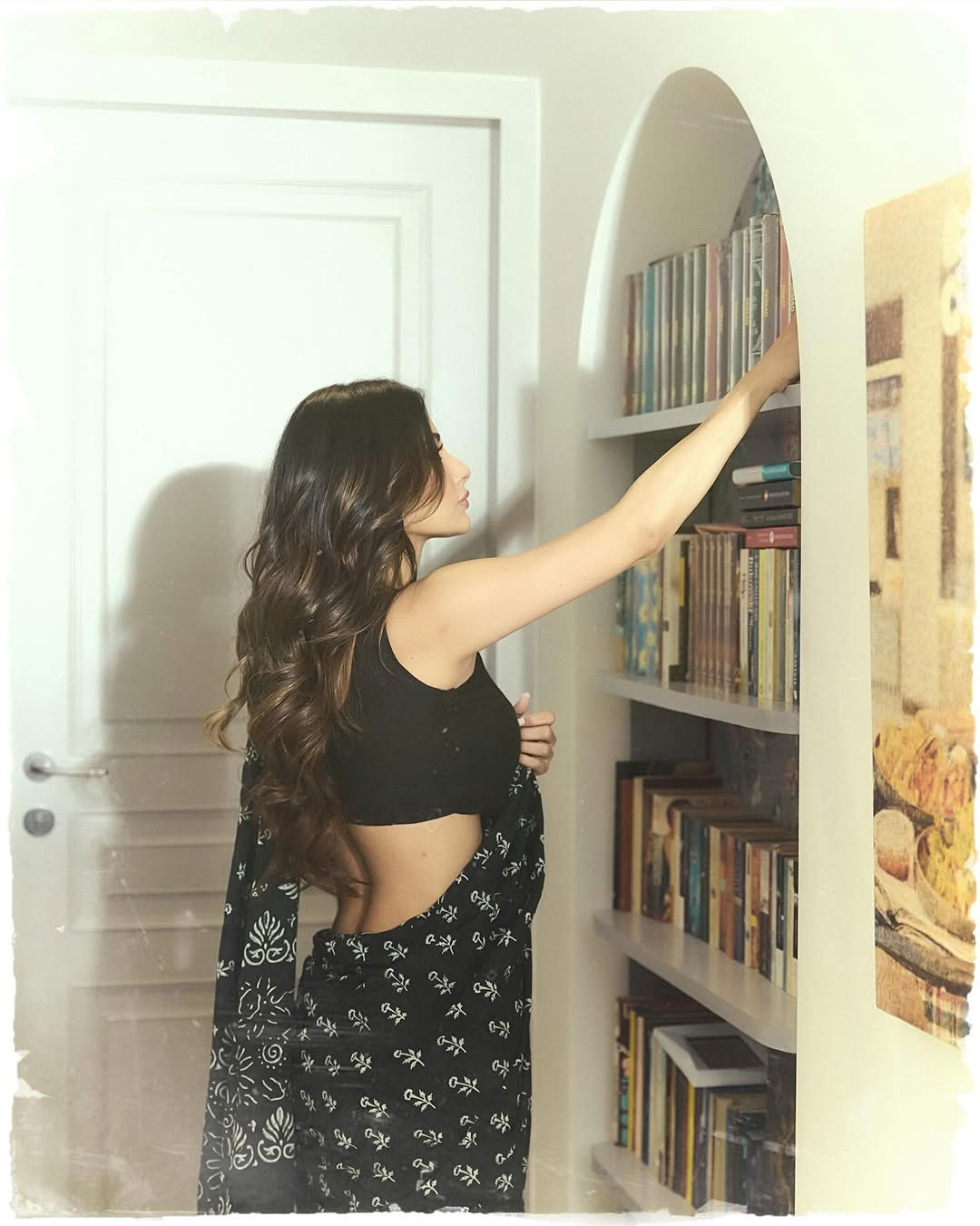
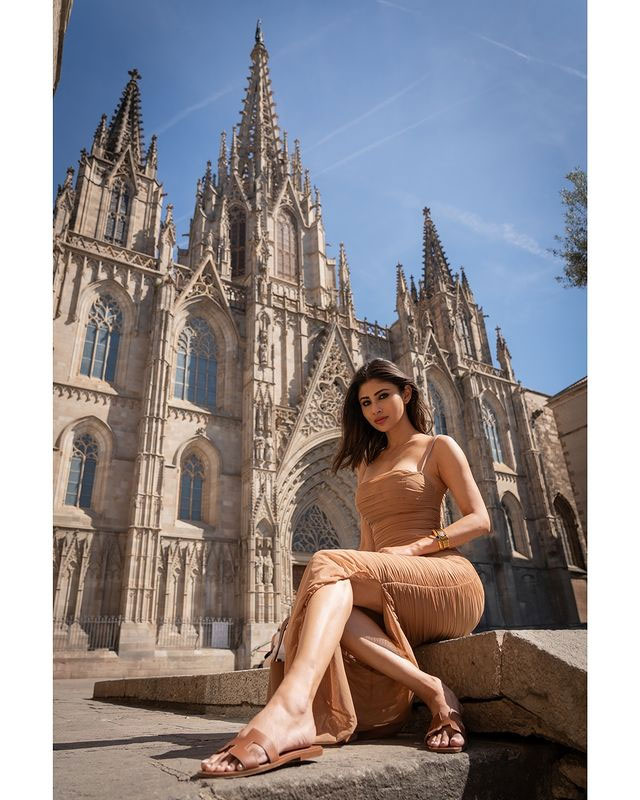

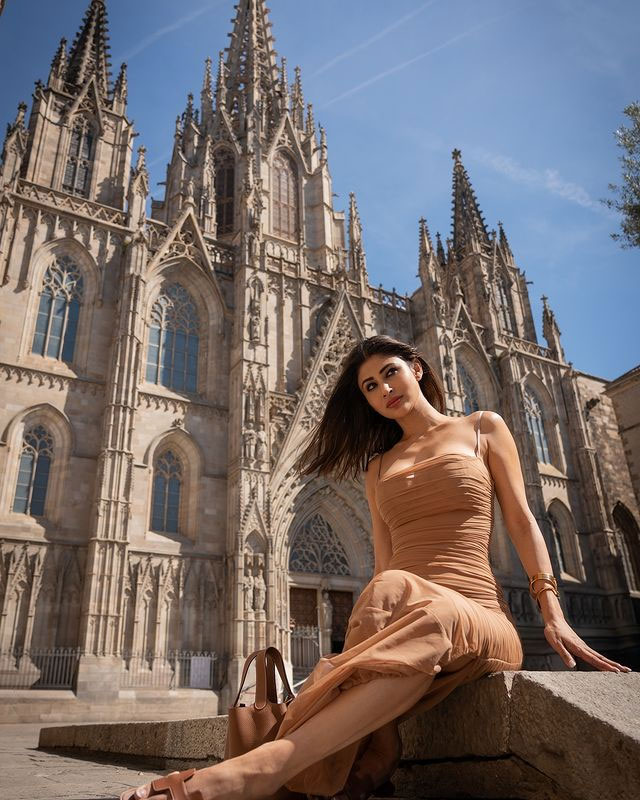

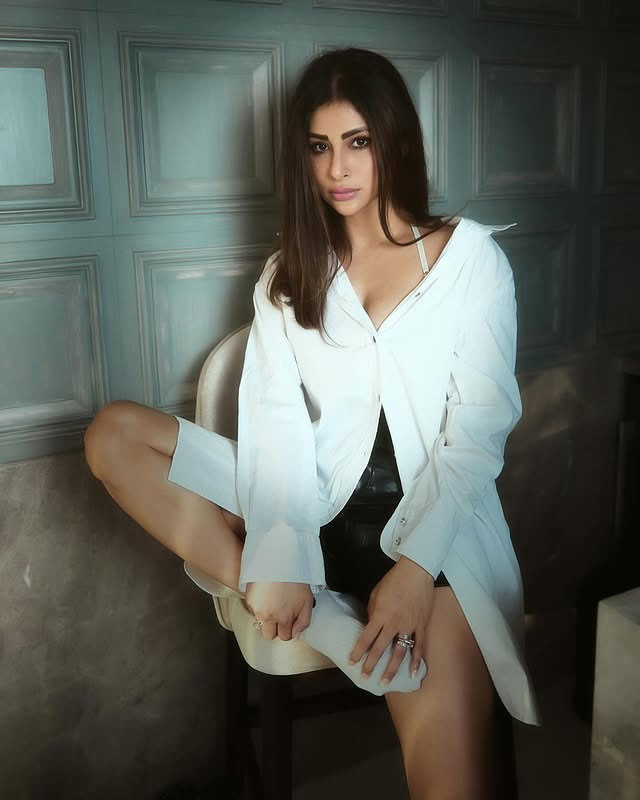
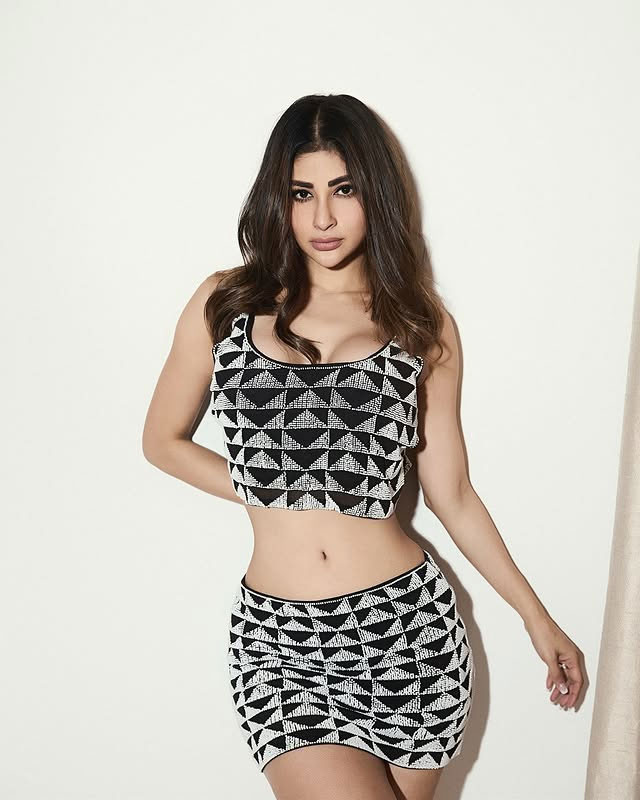
Courtesy: Mouni Roy/Social Media
Stay in the loop
Add to Google Preferred Sources
See OnlyHeroines in your Top Stories
Share this post
Add to Google Preferred SourcesIndian actress (born 1985)